Where Mechanical Precision
Meets Intelligent Automation
SAMCO integrates mechanical, tooling, electrical, controls, and automation engineering to deliver complete rollforming production solutions tailored to specific profiles, materials, and operating requirements. Every system is engineered as a single connected platform, ensuring seamless integration from concept and design through manufacturing, commissioning and full-scale production, maximizing performance, reliability, efficiency, and long-term operational value.


Engineering is What Makes the Solution Possible
At SAMCO, the machine is the outcome. Engineering is what makes it possible.
Every production system begins with a specific profile, material, output requirement, and operating environment. SAMCO integrates mechanical design, tooling, electrical systems, controls, and automation from the earliest stages, ensuring every element is engineered to perform as one unified system.
This integrated approach reduces cross-functional disconnects, addresses technical risks sooner, and ensures design decisions align with manufacturing, commissioning, and long-term operation performance.

Engineering Decisions That
Shape System Performance
The performance of a rollforming line is determined long before production begins. Frame rigidity, shaft sizing, drive coordination, tooling geometry, controls architecture, safety systems, and maintenance accessibility all influence how accurately, efficiently and reliably a system performs throughout its lifecycle.
SAMCO approaches these elements as interconnected engineering decisions, ensuring the complete production system is engineered around the application requirements rather than assembled from independently selected components.

Structural design, shaft rigidity, tooling geometry, and drive coordination help maintain forming accuracy under real production forces and operating speeds.
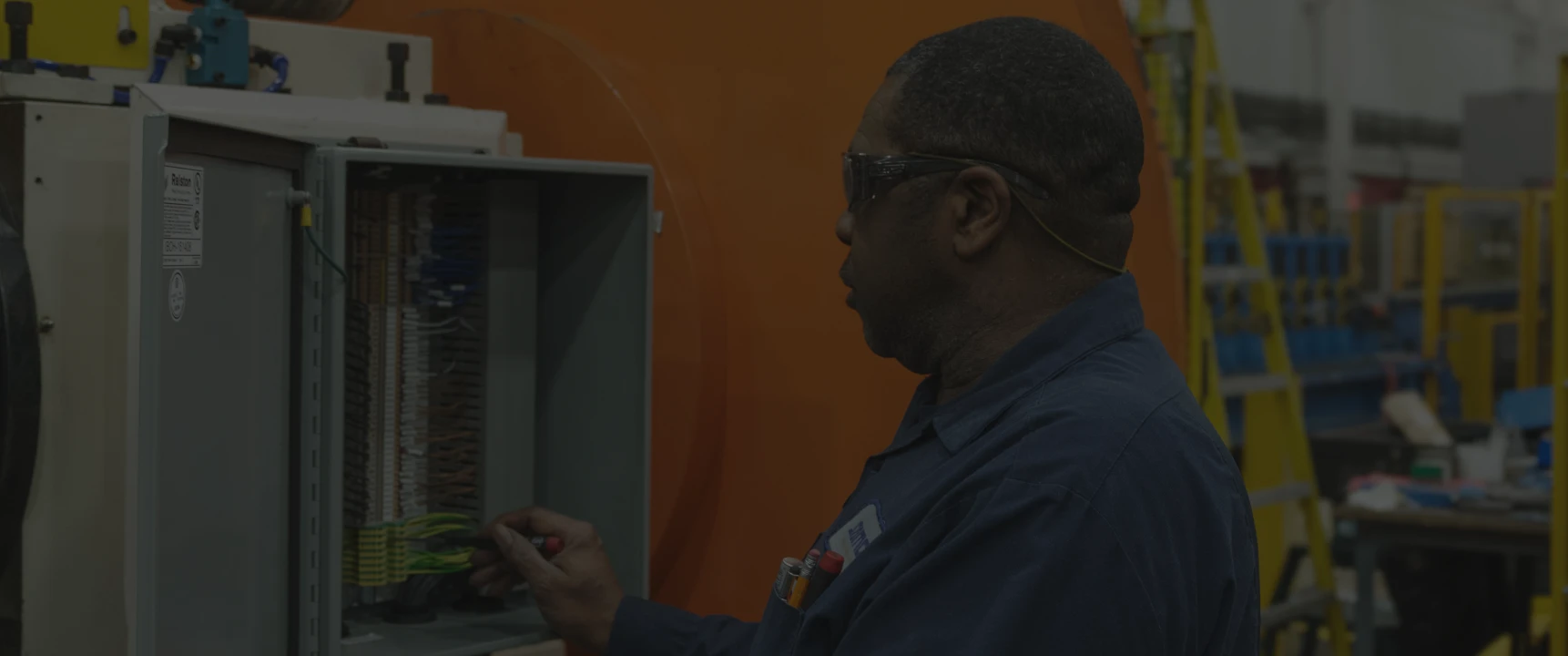
Mechanical, electrical, controls, and automation decisions are aligned so that drives, presses, sensors, tooling, and material handling operate as one synchronized system.

Equipment layouts, component access, documentation, and diagnostic logic are considered during design to support servicing and long-term operation.

Safety architecture, controls logic, component selection, and system monitoring are engineered into the line from the outset rather than added after the core design is complete.
Controls That Bring the
Complete System Together
A modern rollforming line depends on precise coordination between drives, presses, feeders, sensors, cut-off systems, and material handling. SAMCO develops the controls architecture and automation strategy around the specific operating requirements of each line ensuring these systems function as one integrated production platform. The result is greater control over setup, motion, diagnostics, production visibility, and process repeatability across day-to-day operation.
PLC programming, motor control, and synchronized sequencing are engineered to keep line components operating together with accuracy, consistency and predictable performance.
Purpose-built interfaces give operators clear access to setup parameters, production information, alarms, and diagnostics based on the actual line configuration.
Recipe management and motorized adjustment can help reduce manual setup, support repeatable changeovers, and simplify operation where applicable.
Runtime data, fault history, production counters, and monitoring tools can provide clearer insight into line activity and performance.
The level of automation and connectivity can be configured around the application, operating model, and production priorities.

Vertically Integrated.
End-to-End Accountable.
SAMCO brings engineering, tooling, manufacturing, controls, automation, assembly, and commissioning together within one coordinated organization. By maintaining responsibility across the complete project lifecycle, engineering intent is carried through every stage of execution, reducing hand-off gaps, and improving accountability for overall system performance.

Connected Engineering
Mechanical, tooling, electrical, controls, and automation teams collaborate throughout the project ensuring decisions are aligned across the complete production system rather than operating as separate internal suppliers.
In-House Execution
Design intent moves more directly into tooling, machining, fabrication, assembly, and system testing.
Single-System Accountability
Customers work with one organization responsible for the complete line and the way its individual systems perform together.
Optional Closing Line
This continuity extends from initial engineering through commissioning, documentation, and long-term system support.
Built on Certified Processes
Supported by ISO 9001-certified engineering and manufacturing processes.

Need Help Choosing the
Right Solution for Your
Operation?
Tell us about your application, equipment needs, or production
goals, and our team will help guide you to the right solution.
